

Entrecôte Versus Rumpsteak: Which Cut Wins?
- mail49396
- vor 2 Tagen
- 5 Min. Lesezeit
A steak menu can make two cuts look deceptively similar: both are richly flavored, both take beautifully to a hot grill, and both deserve more than a quick glance before ordering. Yet Entrecôte versus Rumpsteak is not a minor choice. It is a decision between buttery marbling and a firmer, beef-forward bite - and the better one depends on the evening you have in mind.
For a classic American steakhouse experience, the distinction matters. One cut brings generous richness and a luxurious texture. The other offers a leaner profile, confident beef flavor, and excellent value when prepared with care. Knowing what sits behind the name helps you order with confidence and cook with better results at home.
Entrecôte Versus Rumpsteak: The Essential Difference
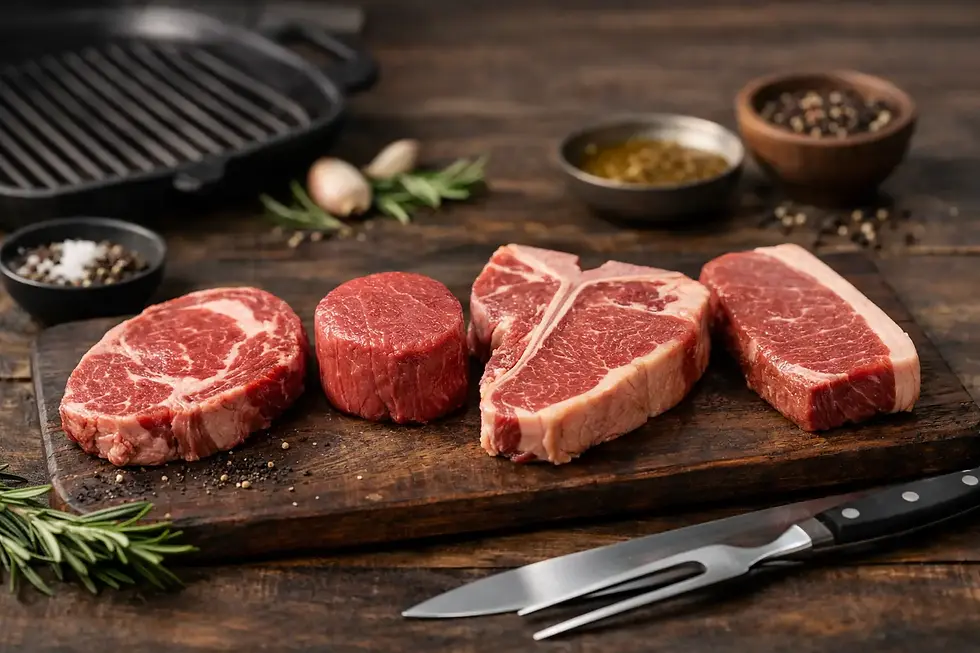
Entrecôte is cut from the rib section, typically from the boneless ribeye area. The name is French, meaning "between the ribs," but the eating experience is familiar to steak lovers everywhere: pronounced marbling, a tender grain, and a full, juicy character. As the intramuscular fat warms during cooking, it bastes the meat from within. That is why a properly grilled entrecôte feels so generous even with nothing more than salt, pepper, and a good crust.
Rumpsteak comes from the hindquarter. Depending on the country, butcher, and menu, the exact definition can vary. In US terms, it may overlap with cuts sold as sirloin or steak from the round, while European and British-style usage often identifies it as a distinct, versatile steak from the rump area. What remains consistent is its character: rumpsteak is generally leaner than entrecôte, a touch firmer in texture, and direct in its beef flavor.
Neither is automatically superior. Entrecôte is usually the more indulgent choice. Rumpsteak is often the more straightforward, lean, and satisfying choice for diners who want flavor without the same level of richness.
Marbling Changes Everything
Marbling is the fine web of fat running through a steak. It is one of the clearest differences between these cuts, especially when working with quality Black Angus beef.
Entrecôte has more marbling, which gives it its signature tenderness and deep flavor. A medium-rare entrecôte will have a soft, almost creamy quality around its edges, while the center stays juicy and intensely beefy. It is a steak that rewards a high-heat sear and does not need much embellishment. A little herb butter, a pepper sauce, or a glass of structured red wine can complement it, but the cut is built to carry the plate.
Rumpsteak has less internal fat. Its flavor is not less interesting - it is simply different. The meat tastes cleaner, more concentrated, and more muscular. Because it is leaner, it benefits from precise timing. Taken too far, it can become dry or chewy. Cooked medium-rare to medium and sliced correctly across the grain, it is flavorful, satisfying, and far more tender than its reputation sometimes suggests.
This difference also affects how filling each steak feels. Entrecôte is richer, so a moderate portion can feel substantial. Rumpsteak is lighter on the palate and works especially well when the meal includes generous sides, a starter, or a sauce with some body.
Flavor and Texture at the Table
If texture is your priority, entrecôte is difficult to resist. Its marbling creates a tender, juicy bite with a rounded, savory finish. The outer fat cap, when rendered properly, adds another layer of flavor. This is the steak for a celebration, a date night, or any meal where the main event should feel unmistakably special.
Rumpsteak has more chew, but that should not be confused with toughness. There is a pleasing structure to a well-cooked rumpsteak. It has a firmer bite and a more classic, straightforward beef profile. Diners who prefer a less fatty steak often choose it for exactly this reason.
Sauces can shift the experience. Entrecôte pairs naturally with sauces that add brightness or aromatic depth without competing with its richness, such as chimichurri, a light red wine jus, or a peppercorn sauce used with restraint. Rumpsteak welcomes a little extra support. A rich jus, mushroom sauce, garlic butter, or a bold barbecue glaze can amplify its lean, savory character.
There is also a practical matter of personal preference. Some people love the richness that marbling provides. Others find a heavily marbled steak too rich after several bites. The right order is not about choosing the most expensive-sounding cut. It is about choosing the steak you will enjoy from the first slice to the last.
How to Cook Each Cut Well
Both cuts respond well to a hot grill, cast-iron pan, or broiler, but they should not be treated exactly the same.
Cooking Entrecôte
Bring entrecôte close to room temperature before cooking, then season simply and generously. Start with very high heat to develop a dark, even crust. Once seared, reduce the heat or move the steak to a cooler part of the grill so the interior can come gently to temperature. The fat needs time to render, especially around the edges.
Medium-rare is a natural target for entrecôte, around 130-135°F after resting. Medium can also work well for diners who prefer more rendering in the fat. Avoid rushing the rest. Five to 10 minutes allows the juices to settle back into the meat rather than onto the plate.
Cooking Rumpsteak
Rumpsteak also needs a hot surface, but it benefits from a slightly more watchful hand. Its lower fat content means it has a narrower window between beautifully pink and overdone. Aim for medium-rare, around 130-135°F after resting, or medium at most if the steak is particularly thick.
Do not press it down while cooking. That sends valuable juices into the pan or grill. Let it rest, then slice thinly across the grain if serving it family-style. This small step makes a noticeable difference to tenderness.
For both cuts, thickness matters as much as temperature. A thick steak gives you more control: a strong crust outside, a warm pink center within. Thin steaks cook quickly, so they need close attention and a shorter rest.
Choosing the Right Steak for the Occasion
Choose entrecôte when you want richness, tenderness, and a true steakhouse centerpiece. It is particularly well suited to a leisurely dinner with classic sides such as creamed spinach, grilled vegetables, crispy fries, or a baked potato. Its marbling also makes it forgiving on the grill, as long as flare-ups are managed and the steak is not overcooked.
Choose rumpsteak when you prefer a leaner cut with pronounced beef flavor and a firmer texture. It is an excellent choice for a relaxed dinner, steak salad, surf-and-turf plate, or a meal where sauces and sides have a larger role. It can also be a smart choice for guests with different appetites, since it delivers steakhouse satisfaction without the heavier finish of ribeye-style cuts.
At Stock’s Steakhouse, the aim is not to turn steak selection into a test. It is to serve well-chosen beef with the attention it deserves: quality sourcing, a proper grill, and a plate built for enjoyment.
A Note on Names and Butcher’s Cuts
Steak names travel poorly across borders. What one menu calls rumpsteak may be labeled sirloin, rump, or a related hindquarter cut elsewhere. Entrecôte can likewise be described as ribeye in many US-style steakhouse settings. If a specific cut matters to you, ask where it comes from on the animal, how it is trimmed, and how the kitchen recommends it be cooked.
That conversation is especially worthwhile when dining abroad. The language on the menu may be French, German, or English, but the qualities worth asking about remain the same: marbling, thickness, aging, and recommended doneness.
The best steak is the one that suits your appetite. Order entrecôte when you want the lush, marbled pleasure of a rib cut. Choose rumpsteak when a leaner, more assertive beef flavor sounds right. Then give the steak a moment to rest, take the first bite without the sauce, and let the cut speak for itself.


Kommentare